
Estimated reading time: 5 minutes
Your child has just stepped into the exciting world of fencing, and as a parent, you might be wondering where to start. From mastering the en garde stance to understanding tournament rules, there’s a lot to learn—but don’t worry, we’ve got you covered! Whether your child is fencing for fun, fitness, or future competition, this fencing guide will walk you through fencing basics for beginners, essential fencing equipment for beginners, and how to support your young fencer every step of the way. Let’s dive in!
What Is Fencing and Why Is It Great for Kids?
Fencing is a fast-paced, strategic sport that blends physical agility with mental sharpness. Often described as “physical chess,” it requires quick decision-making, coordination, and discipline. Here’s why parents love youth fencing for their kids:
- Improves Focus & Discipline – Teaches patience, strategy, and quick thinking.
- Encourages Physical Fitness – Builds agility, strength, and endurance.
- Safe & Controlled – Despite the swords, fencing is one of the safest combat sports due to strict rules and protective gear.
- Great for All Body Types – Speed and technique matter more than size or strength.
- College and Scholarship Opportunities – Many universities have fencing programs that offer scholarships.
- Lifelong Sport – Unlike some high-impact sports, fencing can be enjoyed well into adulthood.
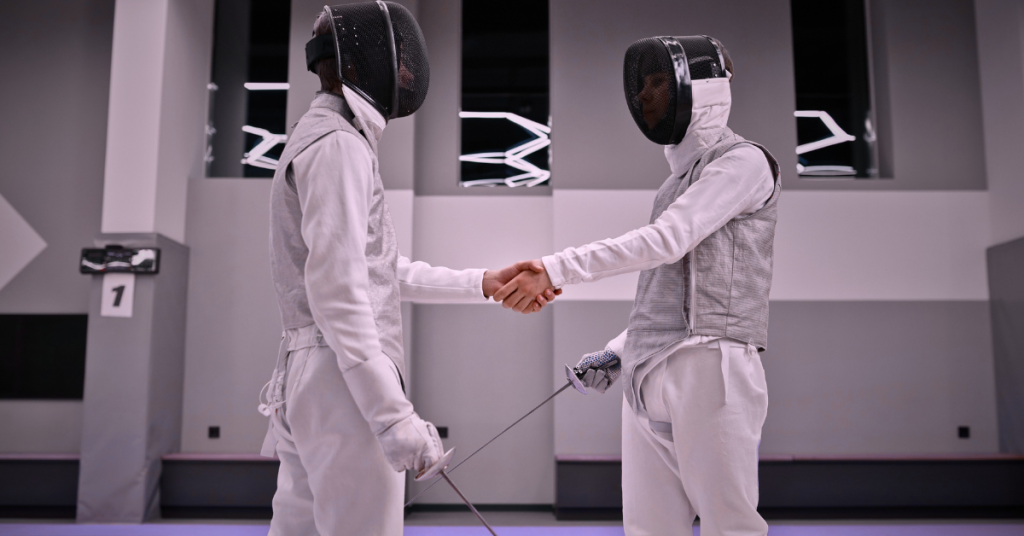
The Three Types of Fencing: Which One Is Your Child Doing?
Fencing has three different weapons, each with unique rules and strategies. Here’s a quick breakdown:
- Foil – A lightweight weapon that targets the torso. Points are scored with the tip. Ideal for precision and technique.
- Epee – A heavier weapon where the entire body is a target. Points are scored with the tip, rewarding patience and strategy.
- Saber – A fast-paced weapon where fencers can score with the edge of the blade. It’s dynamic and aggressive.
How to find out? Ask your child’s coach, or check their equipment! (For example, foil and epee have thin, straight blades, while saber has a slightly curved guard.)
Bonus: Choosing the Right Weapon
Each weapon favors a different personality and skillset. Foil is great for analytical fencers, epee rewards patience, and saber suits those who love speed and aggression. Trying all three weapons at the start can help young fencers determine which one best suits them.
Fencing Gear: What Does Your Child Need?
One of the first things parents notice is all the fencing equipment for beginners. Here’s a simple checklist of essential fencing gear:
- Mask – Protects the face and has a bib covering the neck.
- Jacket & Plastron – Padded gear to protect the torso and arms.
- Glove – Worn on the weapon hand for grip and protection.
- Breeches & Long Socks – Special fencing pants and knee-high socks for leg protection.
- Weapon & Body Cord – The actual fencing sword and a cord to connect to the scoring system.
- Shoes – While general sports shoes work, fencing-specific shoes offer better grip and movement support.
- Chest Protector – Required for female fencers, optional but recommended for males.
- Electric Lame (Foil & Saber Only) – A conductive jacket for scoring.
Pro Tip: Most fencing clubs provide beginner equipment, but if your child gets serious, you’ll eventually want to invest in personal gear to ensure a proper fit and comfort. Buying a beginner fencing kit can be a cost-effective way to get all the essential items.

Understanding Fencing Competitions (Without the Confusion!)
If your child is gearing up for their first tournament, here’s what to expect:
- Pool Rounds: Everyone fences multiple short matches to determine rankings.
- Direct Elimination: Fencers compete in knockout-style matches until a winner is crowned.
- Scoring: Foil and epee score with the tip, saber scores with the edge. Points are awarded based on valid touches in the target area.
- Referee Signals: A raised arm means a valid point, a crossed arm means no point awarded.
- What to Pack: Snacks, water, an extra weapon, body cords, and socks.
Pro Tip: Parents don’t need to memorize every rule! Just cheer your child on and let the referees handle the scoring. Understanding fencing referee signals can help you follow the action more easily.
Supporting Your Child in Their Fencing Journey
As a parent, you don’t need to be a fencing expert—you just need to be supportive! Here are some ways to help:
- Encourage practice – Regular training builds confidence.
- Stay patient – Fencing is technical and takes time to master.
- Focus on effort, not just wins – Learning from losses is key in fencing.
- Be tournament-ready – Pack snacks, water, and a positive attitude!
- Know the Costs – Fencing can have travel, equipment, and club fees. Budgeting ahead can help.
- Connect with Other Parents – Fencing families are a tight-knit community! Joining a club chat or group helps with guidance and support.
- Learn the Basics – Knowing fencing scoring and equipment rules makes it easier to follow along at competitions.

Taking the Next Steps: How to Start Fencing as a Family
Fencing is a long-term sport that rewards commitment and strategy. If your child is enjoying it, consider:
- Joining a Fencing Club: More structured training and access to competitive opportunities.
- Attending Fencing Camps: Summer or intensive training camps help improve skills.
- Exploring College Opportunities: Many schools offer fencing scholarships.
- Learning the Sport as a Family: Some parents take up fencing too—it’s never too late to try!
Let’s Fence
Fencing is an exciting sport that teaches valuable life skills beyond the piste (fencing strip). Whether your child is just starting out or dreaming of championships, your support makes all the difference. Keep cheering, learning, and enjoying the journey!
Want to learn more? Check out our other beginner-friendly guides for more insights on fencing basics for beginners, choosing the best fencing gear, and preparing for competitions!
En garde, ready… fence! ⚔️